
Projects
Below are some projects that we are currently working on in our group.
Data-Coupled Flow Matching
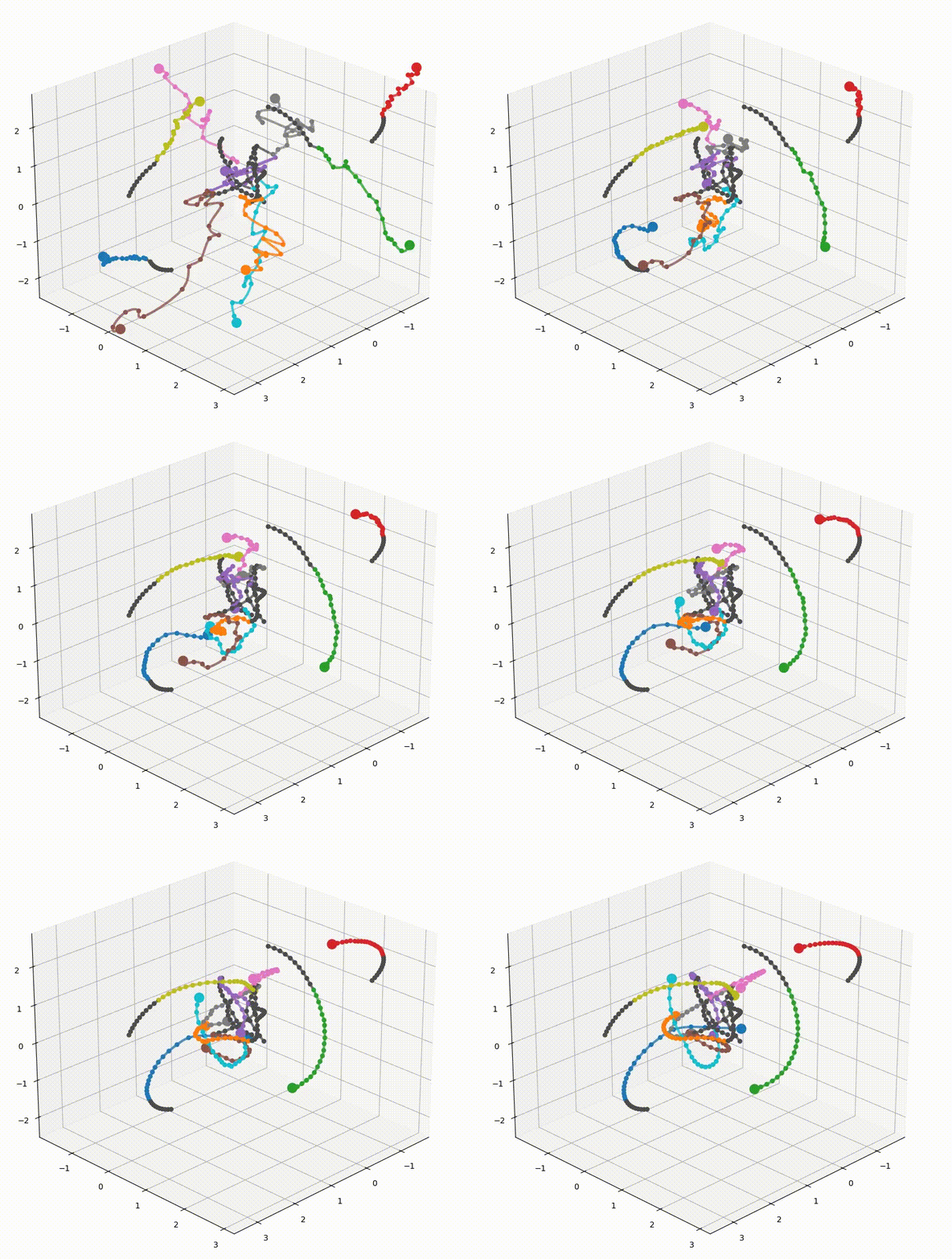
Understanding and simulating complex dynamical systems is a central theme of our research. Many scientific and societal systems, ranging from interacting particles in physics and molecular dynamics to groups of humans navigating shared spaces can be described as geometric trajectories of multiple interacting entities. These systems are difficult to model as they exhibit strong coupling between agents, multi-scale temporal structure and sensitivity to perturbations At the same time, practical simulators benefit from being probabilistic, capturing uncertainty and multimodality while being computationally efficient at scale. Our work investigates how modern generative modeling, in particular flow matching-based methods, can be adapted to respect the structure of these systems while avoiding the inefficiencies of autoregressive rollouts and uninformed Gaussian priors.
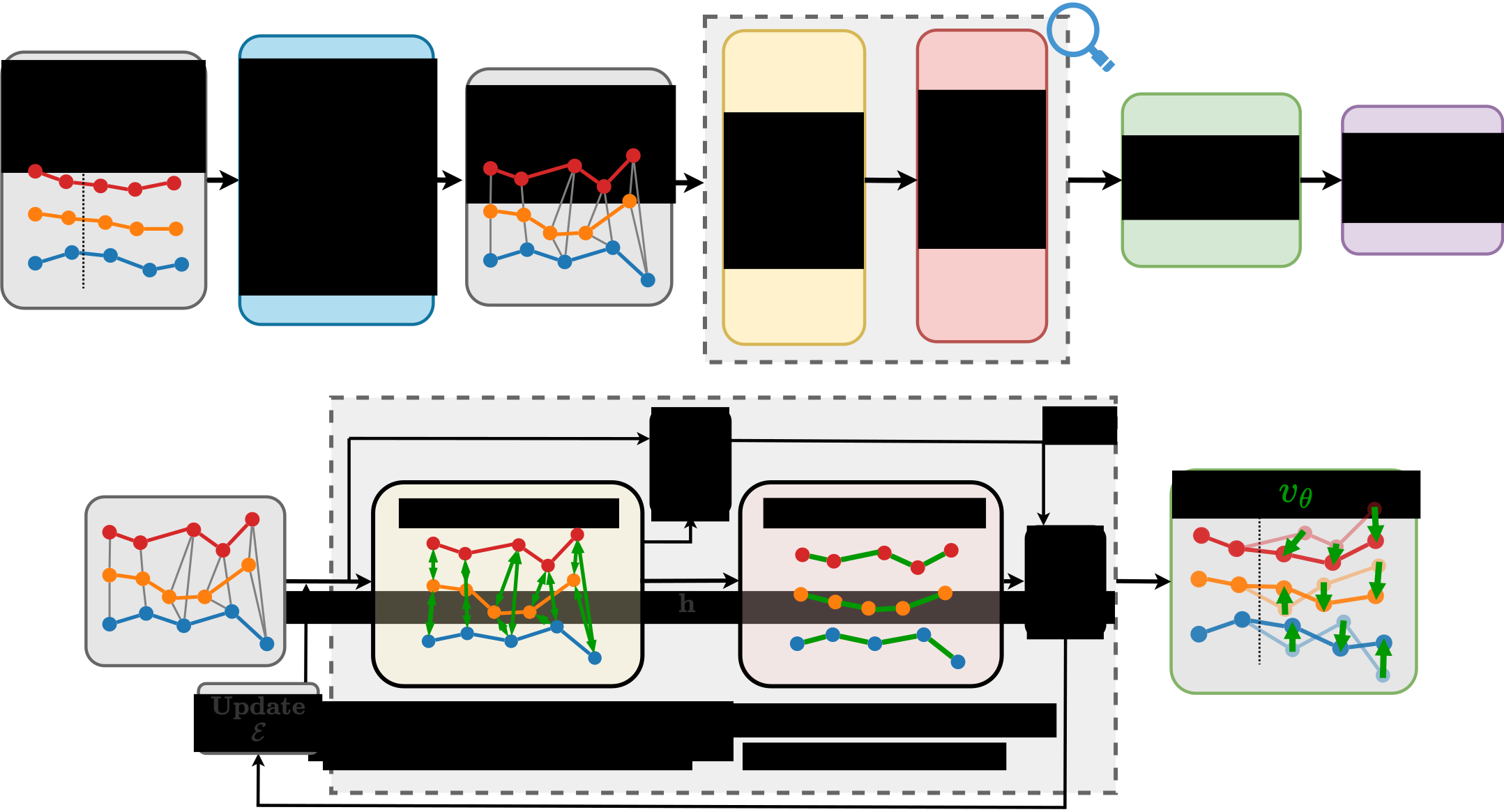
We are currently researching data-coupled generative priors for conditional trajectory simulation. Rather than initializing generative models just from generic Gaussian noise, we construct informed priors that are directly conditioned on observed initial frames, embedding basic dynamical structure such as continuity and inertia. This reduces the transport cost between prior and target trajectory distributions, simplifies the learned vector fields, and enables accurate simulation with very few integration steps. This line of work has demonstrated state-of-the-art accuracy and improved scaling on benchmarks in N-body physics, molecular dynamics, and human trajectory forecasting. More broadly, our work is trying to advance a principled view of prior design in conditional generative modeling for dynamical systems, aiming to build scalable, symmetry-aware simulators that generalize across domains and temporal horizons.
Relevant publication:
Mechanical Metamaterials
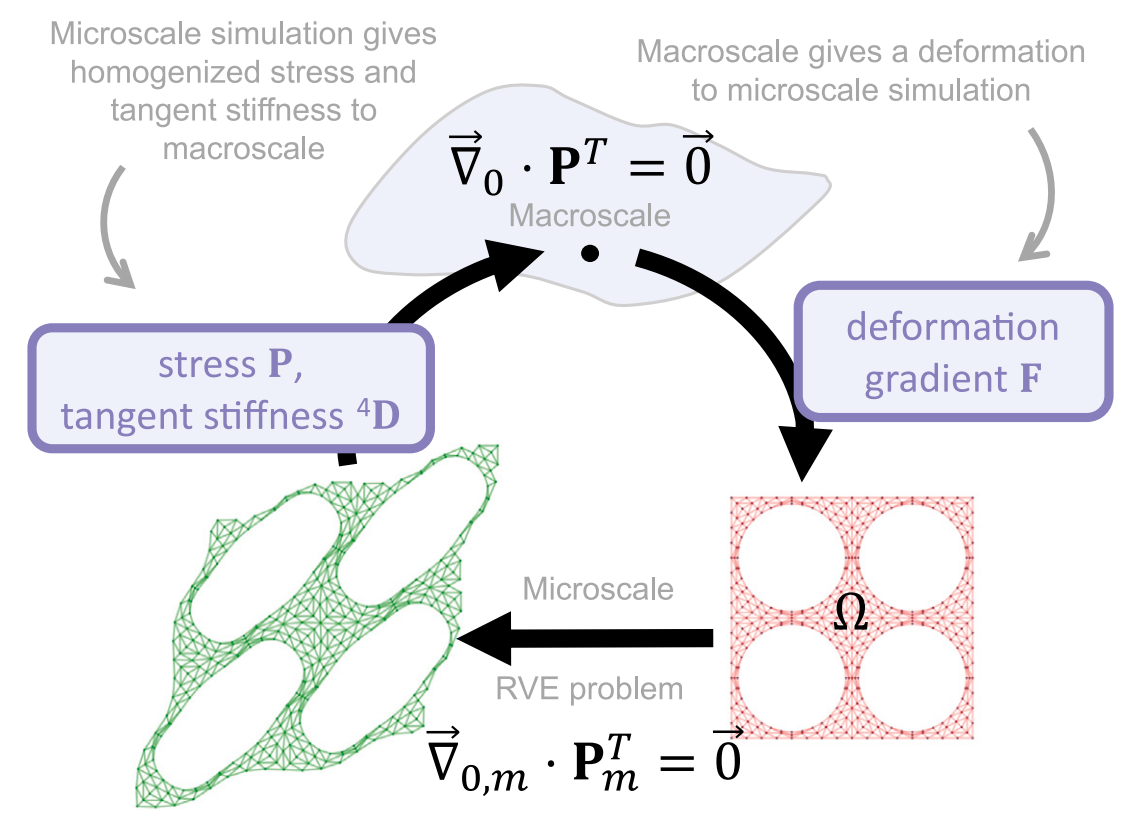
Metamaterials are engineered structures whose microscopic geometry gives rise to unusual properties — such as tunable stiffness, shape-morphing behavior, or adaptive acoustic response — that don’t occur in conventional materials. Our research focuses on flexible, porous mechanical metamaterials that can actively change their mechanical or acoustic properties when stimulated by mechanical, pneumatic, or magnetic loading. Such materials have potential applications in soft robotics, adaptive structures, and biomedical devices.
Designing these metamaterials is challenging because their behavior involves complex, nonlinear deformations and pattern transformations like buckling. Exploring their vast design space through traditional simulations is computationally expensive. To overcome this, our team is developing machine learning–based surrogate models, particularly graph neural networks (GNNs), that can accurately and efficiently predict the response of metamaterials with arbitrary geometries. These models capture essential physical symmetries (like rotation, scaling, and periodicity) and can generalize to new designs, enabling faster and smarter discovery of metamaterials tailored for specific functions.

Relevant publications:
- Similarity equivariant graph neural networks for homogenization of metamaterials
- Wallpaper Group-Based Mechanical Metamaterials: Dataset Including Mechanical Responses
- Mechanical Metamaterial: Square Array of Circular Holes Under Deformation
Pedestrian Dynamics
Understanding how pedestrians move and interact in crowds is both a fundamental problem in active matter physics and essential for designing safer, more efficient urban spaces. Traditional studies face a trade-off between the control of laboratory experiments and the scale of real-world observations, limiting our ability to capture the true complexity of crowd behavior. Our team bridges this gap through virtual surrogate experiments powered by graph neural networks (GNNs), trained on large-scale pedestrian tracking data.
This approach, realized in our Neural Crowd Simulator (NeCS), reproduces known results in collision avoidance and reveals new insights into multi-person (N-body) interactions, showing that pedestrians respond primarily to a small number of nearby individuals within a limited field of view. By combining data-driven modeling with physical interpretability, we uncover the topological nature of social interactions in crowds, challenging long-held assumptions of additive pairwise forces. Beyond pedestrian movement, this framework demonstrates how machine learning can accelerate discovery in complex social and physical systems, from animal collectives to opinion dynamics.
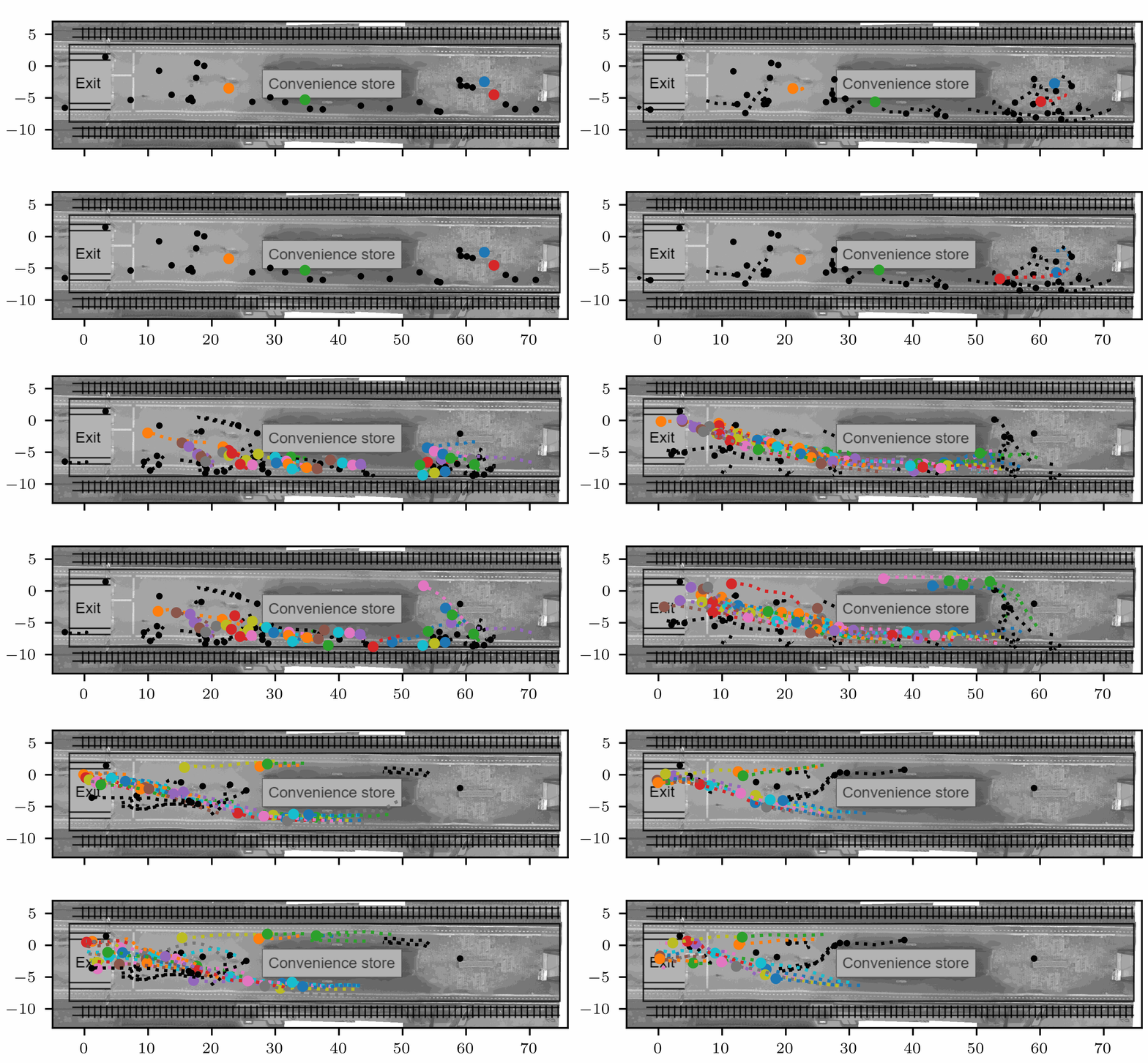
Color indicates the more interesting long-distance trajectories.
Relevant publications:
- Discovering interaction mechanisms in crowds via deep generative surrogate experiments
- Equivariant Neural Simulators for Stochastic Spatiotemporal Dynamics
- Flow Matching for Geometric Trajectory Simulation
Zeolites
Reducing atmospheric CO₂ requires materials that can efficiently capture and store gases—and zeolites, nanoporous crystals with tunable structures, are among the most promising candidates. Their adsorption performance depends sensitively on both the crystal topology and the distribution of aluminum and silicon atoms, creating an enormous space of possible configurations that is too vast to explore experimentally or even through traditional simulations.
Our research introduces SymGNN, a symmetry-informed graph neural network that embeds the physical symmetries of crystalline materials directly into its architecture. By incorporating symmetry operations into message passing, SymGNN improves generalization across zeolite topologies and accurately predicts CO₂ adsorption isotherms and heats of adsorption—even for structures not seen during training. Beyond reproducing simulation data, the model can be used to analyze experimental adsorption measurements and infer underlying structural features, such as aluminum distributions. This approach demonstrates how physics-aware AI models can accelerate materials discovery and guide the inverse design of nanoporous materials for carbon capture and other sustainability applications.

Relevant publications:
- Symmetry-informed graph neural networks for carbon dioxide isotherm and adsorption prediction in aluminum-substituted zeolites
- Equivariant Parameter Sharing for Porous Crystalline Materials
Master Graduation Projects
Our group regularly offers opportunities for exciting Master projects. If you are an interested Master student at the TU/e, here is the list of updated available Master projects.
Past Projects
Cellular Potts
Collective cell behaviors, such as tissue growth, morphogenesis, or cancer invasion—arise from complex interactions that are difficult to capture with traditional physics-based models. The Cellular Potts Model (CPM) has long been a cornerstone for simulating multicellular dynamics, but it relies on hand-crafted Hamiltonians that only approximate biological reality. To overcome this limitation, we introduce NeuralCPM, a data-driven extension of the CPM that replaces or augments the analytical Hamiltonian with a learned neural network.
At the heart of NeuralCPM is a Neural Hamiltonian architecture that respects key physical symmetries—such as translation and permutation invariance—ensuring realistic and generalizable simulations. This hybrid framework seamlessly integrates known biological mechanisms with learned, higher-order interactions, combining interpretability and expressiveness. Trained directly on observational data, NeuralCPM accurately reproduces cell behaviors that cannot be modeled analytically, from synthetic benchmarks to real multicellular systems. This work bridges statistical physics and deep learning, opening the door to AI-driven discovery of self-organization principles in living tissues.


Relevant publications: